Bonita Springs, FL · Garage Door Service
Cable repair for Golden Gate's 1980s-era garage doors. We travel 13 miles from Bonita Springs to fix frayed and snapped cables on original drum hardware.
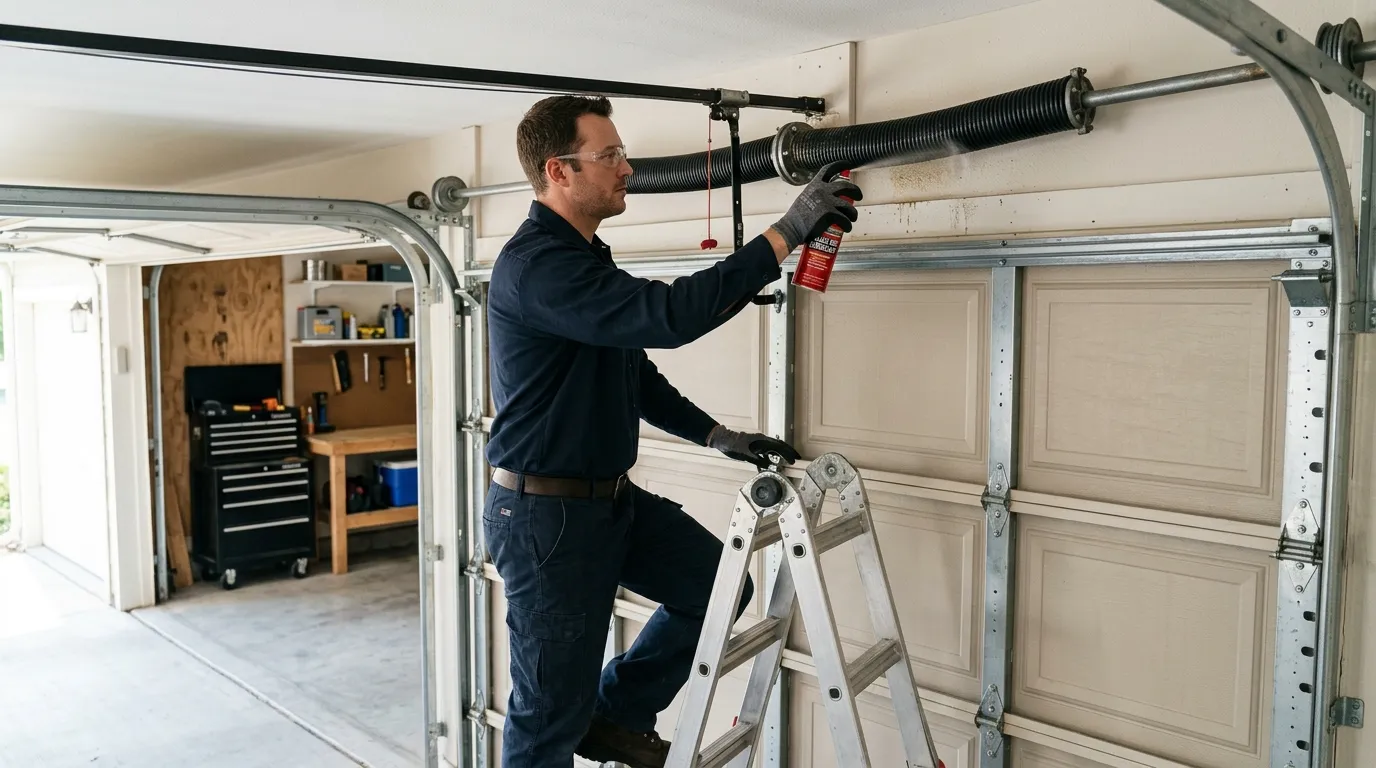
A straightforward cable job - one snapped cable, drum and bearing still good - is a different bill than a job where the drum has worn a groove and chewed through the cable twice already. Golden Gate's housing stock centers on 1986, and a lot of those doors still carry their original steel drums. Steel drums from that era were stamped thinner than what goes on doors today, and once the edge wears, it starts cutting cable instead of winding it cleanly. We won't quote a number here without seeing the drum, because the drum is usually what decides whether this is a cable swap or a cable-plus-drum job. What we can tell you is that guessing the price before we're on site does neither of us any favors - a $64,767 median household income means most Golden Gate homeowners are budgeting this repair carefully, and a lowball phone quote that turns into a surprise at the door isn't a good way to earn a second call.
We travel the 13 miles from Bonita Springs for this work, and we price the job the same whether it's a single frayed cable or a full pair. If both cables are original to a 1986 install, we'll say so and let you decide whether to do both sides now or wait for the second to go.
Most Golden Gate calls on this start the same way: the door drops crooked, hangs at an angle, or slams the last six inches instead of settling. That's a cable that's let go on one side while the other is still holding tension - never assume it's just noisy hardware. Sometimes it's slower: a visible fray at the bottom bracket, strands lifting off the cable like a frayed shoelace, weeks before it actually breaks.
On the older end of Golden Gate's stock - houses close to that 1986 median, some older - we see galvanizing worn off the cable where it rides the drum groove, leaving bare wire exposed to rust. Mild coastal humidity doesn't cause dramatic failure, but it does shorten the life of a cable that's already thinning. By the time you hear a bang and the door won't budge, that cable has usually been fraying for a while.
A single cable replacement, once we're on site with the right length and drum fitting, usually runs under an hour. Where it stretches longer is diagnosis: on a door built to 1986-era specs, cable length and drum pitch aren't always the same as what's on the shelf for a new door, so we measure before we cut rather than assume a stock length fits.
If the door is a two-cable extension-spring setup rather than torsion, both sides often need attention even if only one has failed - uneven wear is normal after decades on the same hardware. That adds time, but it's better to do both while the door is already down than to get called back in six months for the second one.
The complication we run into most in Golden Gate isn't the cable itself - it's what the cable was hiding. A cable that's been fraying against a worn drum edge for months can also mean the drum needs replacing, and on a door old enough to sit near that 1986 median build year, the original drum may not match anything currently stocked. We carry common sizes on the truck, but a nonstandard pitch means a return trip.
Extension-spring doors, common on homes from this build era, also complicate things because the cable runs through a pulley system at the top of the track. If that pulley has seized or the bracket has rusted, replacing the cable alone doesn't fix the underlying drag that caused it to fray in the first place. We'll flag that before we button the door back up rather than leave you with a repair that fails again in a year.
One limitation worth saying plainly: if the drum, the pulley bracket, and the cable are all original and all worn, sometimes replacing the whole spring-and-hardware assembly costs less over time than patching each part as it fails. We'll tell you when we see that, even though the smaller job is the easier sell.
Golden Gate's roughly 8,100 households sit on housing that clusters tightly around 1986 construction, which means a large share of the neighborhood's garage doors were installed with the same generation of hardware - stamped drums, galvanized cable, extension springs on many single-car and older double-car doors. That's not a coincidence of one house; it's the whole area aging on the same clock.
Mild temperate conditions mean this area isn't dealing with the freeze-thaw cycling that snaps cables outright in colder climates. Instead, failure here is slow: corrosion and wear at the drum groove over thirty-plus years, not sudden cracking. That's why a Golden Gate cable failure often comes with warning signs for weeks - a fraying strand, a slight shimmy - rather than a sudden snap with no notice.
For cable calls into Golden Gate, we carry galvanized cable in the lengths common to extension-spring and torsion setups from the 1980s-90s building era that dominates this area, along with matching drums and pulley hardware sized to fit older stamped-steel setups. If a door needs a length or pitch we don't have loaded, we'll say so on site rather than force a fit that won't hold.
We don't stock every obsolete part variation from every decade - some hardware from this era was made by manufacturers no longer supplying replacement parts, and in those cases we'll talk through whether a compatible substitute or a hardware upgrade makes more sense than chasing an exact match.
It often isn't sudden - a cable usually frays at the drum for weeks before it lets go. On Golden Gate's older doors, built mostly around 1986, the galvanized coating wears off at the drum groove first, then the bare wire rusts and weakens until it finally breaks under tension.
No. We run out of Bonita Springs and drive the 13 miles into Golden Gate for cable calls. There's no separate depot here, just a truck stocked for the job before we head out.
Often, yes. But if the drum has a worn groove or the pulley bracket is seized, a new cable alone will fray again quickly. We check both before we call the job finished, and we'll tell you if the drum needs replacing too.
It usually means the door is unsafe to operate - it can hang crooked or drop unevenly. Don't force the opener. It's not the kind of thing that needs to wait, but it's also not something we'll pressure you to treat as a middle-of-the-night call.
Call now or request a free quote - same-day service on most repairs, upfront written pricing.