Bonita Springs, FL · Garage Door Service
Frayed or snapped garage door cables are common in Bonita Springs homes built from 1979-2007. We diagnose the cause and fix it right the first time.
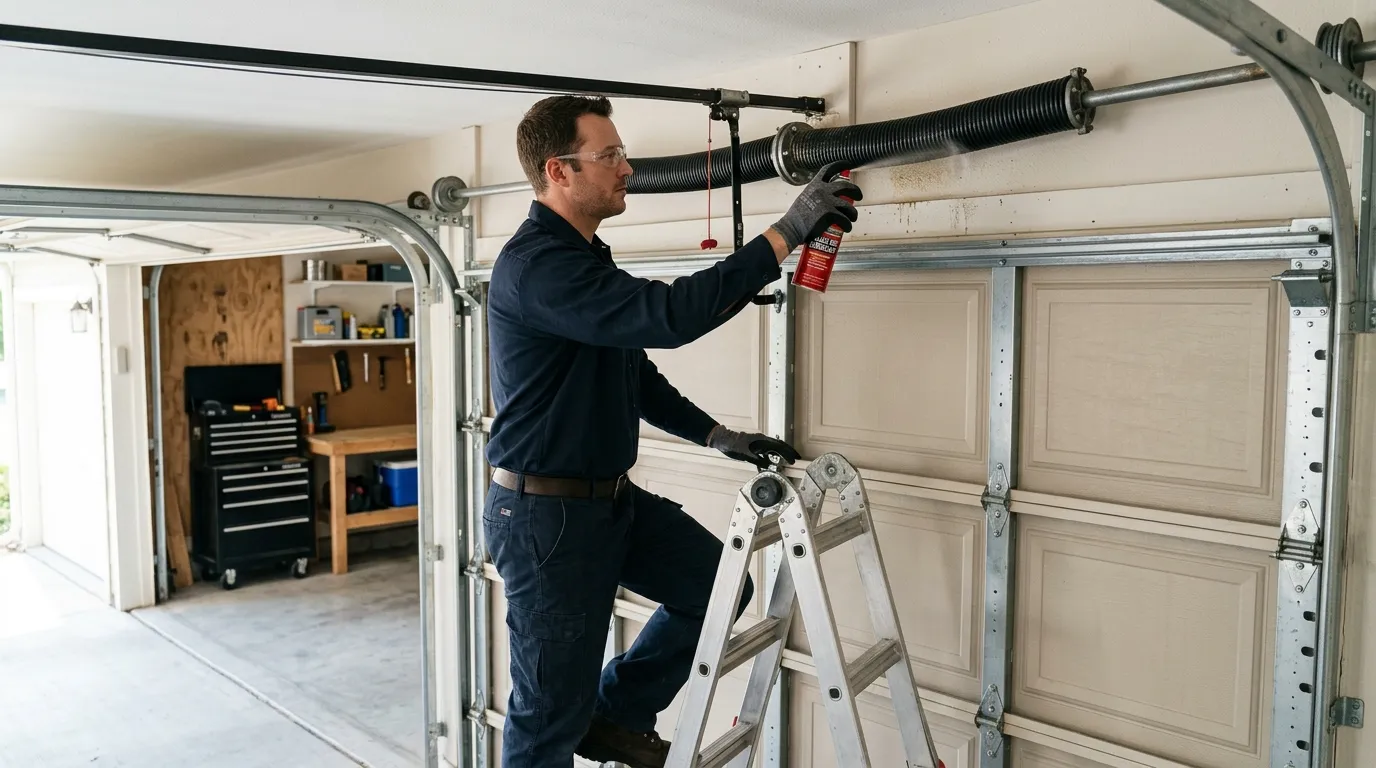
Most of the housing stock across this service area went up between 1979 and 2007, with a median build year around 1986. That means a lot of doors are running on cable and drum systems that are now three to four decades old, installed with hardware that was standard for that era but isn't what gets put in today. The area's mild temperate climate doesn't put the same stress on cables that freeze-thaw regions see, so people assume cable failure here is rare. It isn't - it's just slower and quieter. Salt-tinged humidity near the coast corrodes galvanized cable strand by strand from the inside, so a cable can look fine on the drum and still be down to a handful of intact strands. Add in the number of coastal and inland communities across this service area - from Bonita Bay two miles out to Golden Gate and Orangetree well inland - and you get a wide spread of housing built in that same 1980s-90s window, all aging on the same schedule. The failure mode is consistent: one strand goes, then the rest let go fast, usually on the side that takes the most cycles. That's the pattern we see across this whole area, not just one neighborhood.
A garage door cable is under real tension even with the door down, because the torsion spring is still loaded. If a cable has already snapped, the door can be sitting crooked or jammed in the track, and the opposite cable is often close to going too. Don't cut the zip tie the last guy left on the spring, don't unbolt the drum, and don't try to feed a new cable through while the spring is wound. This is one of the jobs where the tool cost isn't the risk - the stored energy in the spring is. If you're comfortable with basic mechanical work, you can safely check whether it's actually the cable and not the spring, roller, or track: look for a visibly frayed or unwound cable on one side, a door that hangs unevenly by an inch or more, or a cable that's slipped off the drum grooves. Past that, replacing the cable means releasing spring tension safely, which takes winding bars and a locked stance most homeowners don't have set up. We'd rather talk you through what you're looking at over the phone than have you improvise with a socket wrench and a stepladder.
The most common first sign is a door that looks tilted when it's about a third of the way down - one side keeps moving while the other stalls. Sometimes you'll hear a sharp snap followed by a loud bang as the door drops onto the track or the floor. Other times it's slower: a faint scraping or clicking sound each time the door cycles, which is a cable riding loose on the drum before it lets go completely. If your opener strains, reverses on its own, or the door refuses to open more than a few inches, the cable may already be partially unwound and binding the track. Given the age range of doors in this area, we also see cables that haven't failed yet but are visibly rust-streaked or fraying near the bottom bracket - that's the same corrosion pattern the mild coastal humidity produces over twenty-plus years, and it's worth fixing before it becomes an after-hours call.
When you call, tell us the door's behavior - stuck, tilted, banging, or just noisy - and whether it's a single or double door, since double doors carry more cable and drum. We carry standard cable and drum sizes on the truck for most residential doors built in this area's common 1980s-2000s range; the honest limitation is that some older custom or oversized doors use cable lengths or drum diameters we don't stock and need to order, which adds a day or two. Given the median household income across this service area, most owners choose a straight cable-and-drum repair over a full door replacement when the panels and track are otherwise sound - it's the cheaper fix and it holds up fine once done correctly. We work across the full service area, including communities like Pine Ridge, Vineyards, and San Carlos Park, so tell us your general area when you call and we'll give you a realistic window.
If the door is down and stuck, it can usually wait a day or two safely as long as no one forces the opener. If the door is stuck partway up or hanging unevenly, don't leave it - the remaining cable can slip further and the door can drop. Keep the opener disconnected and the door manually blocked until we get there.
Cable wear happens on the strand level, inside the coating, long before the panels or track show age. In this area's mild coastal humidity, galvanized strand corrodes gradually even under a cable that still looks clean on the outside. A door built in the common 1979-2007 range for this area is often right at the point where original cable finally gives out.
If one cable has snapped, the other side has usually done the same number of cycles under the same load, so we generally recommend replacing both at once. It costs less than a second truck visit a few months later when the other one goes.
No. A frayed or corroded cable is a strength failure, not a tension problem, and tightening a weakened cable doesn't add back the strands it's lost. It just delays the same snap under the same load.
By Neighborhood
We also handle cable repair in these Bonita Springs-area suburbs.
Call now or request a free quote - same-day service on most repairs, upfront written pricing.