Bonita Springs, FL · Garage Door Service
Most Bonita Springs homes went up between 1979 and 2007. Original doors from that era are aging out. Here's why installs go wrong here and how to get one done right.
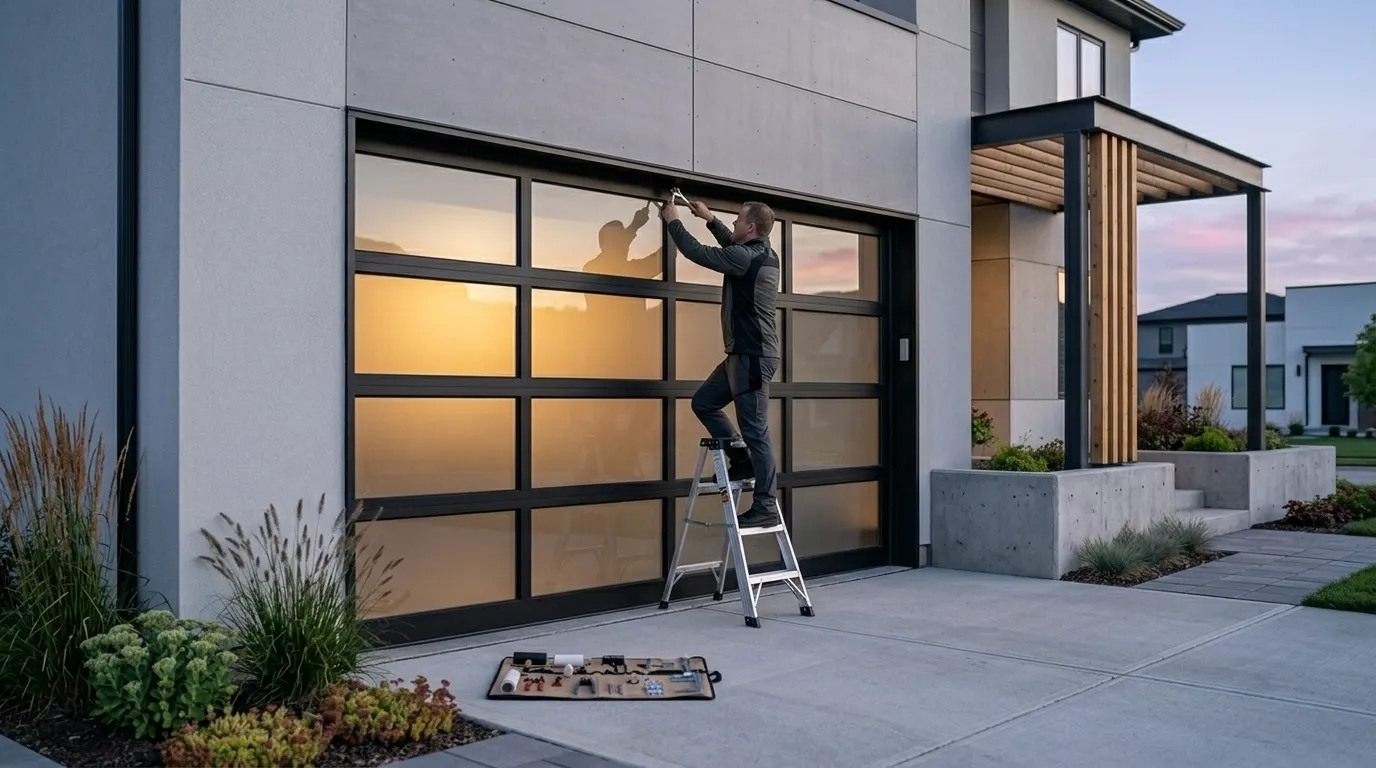
Most of the housing stock around here dates from 1979 to 2007, with a median build year around 1986. That means a huge share of garage doors in this area are original equipment - steel panels, tracks, and openers that were installed once, decades ago, and never touched again. A door built in the mid-80s is well past the point where a spring replacement or a track adjustment makes sense; the panel itself is delaminating from the inside, and the hardware is worn to a shape nobody can true up anymore.
Add the climate. This is a mild, humid coastal band, not a place with hard freezes, but the constant moisture in the air does its own kind of damage - steady low-grade corrosion on hinges, rollers, and the galvanized coating on older tracks. A door that would last another ten years in a dry inland climate is often rusted through at the bottom panel here well before that. Homeowners call about a spring or a noisy roller and find out the whole door needs to come off, because the fix they wanted isn't available anymore for a door built to a spec from 1986.
A garage door installation is not a spring swap, and it's not a weekend job to learn on. The door itself is heavy, the springs are under real tension, and getting the track plumb on an opening that's settled a bit over 30-plus years takes more than a level and a tape measure. If your house is one of the many in this area built during that 1979-2007 run, the rough opening may not match current door sizing exactly, and that mismatch is where a lot of DIY installs go wrong - gaps at the jamb, a door that binds halfway up, an opener straining against resistance it was never meant to fight.
We'll say plainly what we don't do: we don't sell doors we haven't measured for in person, and we don't quote a full install over the phone. Sight-unseen numbers for a job like this are close to useless once you're dealing with an older opening. If you want to do the demo yourself to save some money, that's fine - just don't touch the springs or the header bracket, and don't run the opener until the door is fully secured on its own hardware.
On older Bonita Springs installs, the tell is usually the bottom two panels - rust bubbling through the paint near the weatherstrip, worse on the side that faces prevailing wind and rain. Rollers that used to be quiet start grinding, not because of one bad roller but because the whole track has picked up enough corrosion film to fight every ball bearing that rolls through it. Openers from that same building era are often original too, and when they finally give out, it's rarely a clean failure - more often the gear slips a little each time until the door stops responding to the remote days before it stops responding at all.
Some of this shows up as noise, some as a door that reverses on its own partway down, and some as a door that just gets heavier to lift by hand every month. None of those symptoms mean the same fix. A full install replaces the door and often the track and opener together, which is a different job and a different cost than patching one bad part on a door that's otherwise sound.
We install across Bonita Springs and the surrounding communities - out toward Bonita Bay a couple miles west, and into the wider ring that includes Pelican Bay, Pine Ridge, San Carlos Park, and Vineyards. With household income in this service area running a median around $92,575 across roughly 67,600 households, a lot of the calls we get are homeowners upgrading from a builder-grade original door to something heavier-duty and better insulated, not just replacing like for like.
Booking starts with a look at the opening in person - we won't quote a full install without seeing the track, header, and framing, since so many houses here were built to specs from the 1980s and 90s that don't always match what's sold today. Once we've measured, we can tell you straight whether your existing opener is worth keeping or whether it's due too. Reach out through the site and we'll get a time on the calendar.
If your house was built in that 1979-2007 wave that's common around here, and the door is original, you're likely looking at 20 to 45 years of service already. Once the panel is rusting or delaminating, or the track hardware is too worn to true up, a repair just buys a few months. We'll tell you honestly when a fix is enough versus when it isn't.
Yes. This is a mild, humid coastal climate, and steady moisture in the air corrodes hinges, rollers, and galvanized track coatings faster than a drier inland climate would. It's less dramatic than storm damage, but it's constant, and it's a big reason older doors here fail at the hardware level before the panel itself gives out.
Often, but not always. Houses built during the 1980s-90s boom in this area sometimes have rough openings that don't match current standard door sizing exactly. We measure in person before quoting so we're not guessing, and so you're not stuck with a door that binds or leaves a gap at the jamb.
Not for a full installation. Springs, track alignment, and header condition all matter, and on an opening that's 20 to 40 years old there's usually something that needs a look in person. We can talk through general questions by phone, but the actual number comes after we've seen the door and the framing.
Call now or request a free quote - same-day service on most repairs, upfront written pricing.